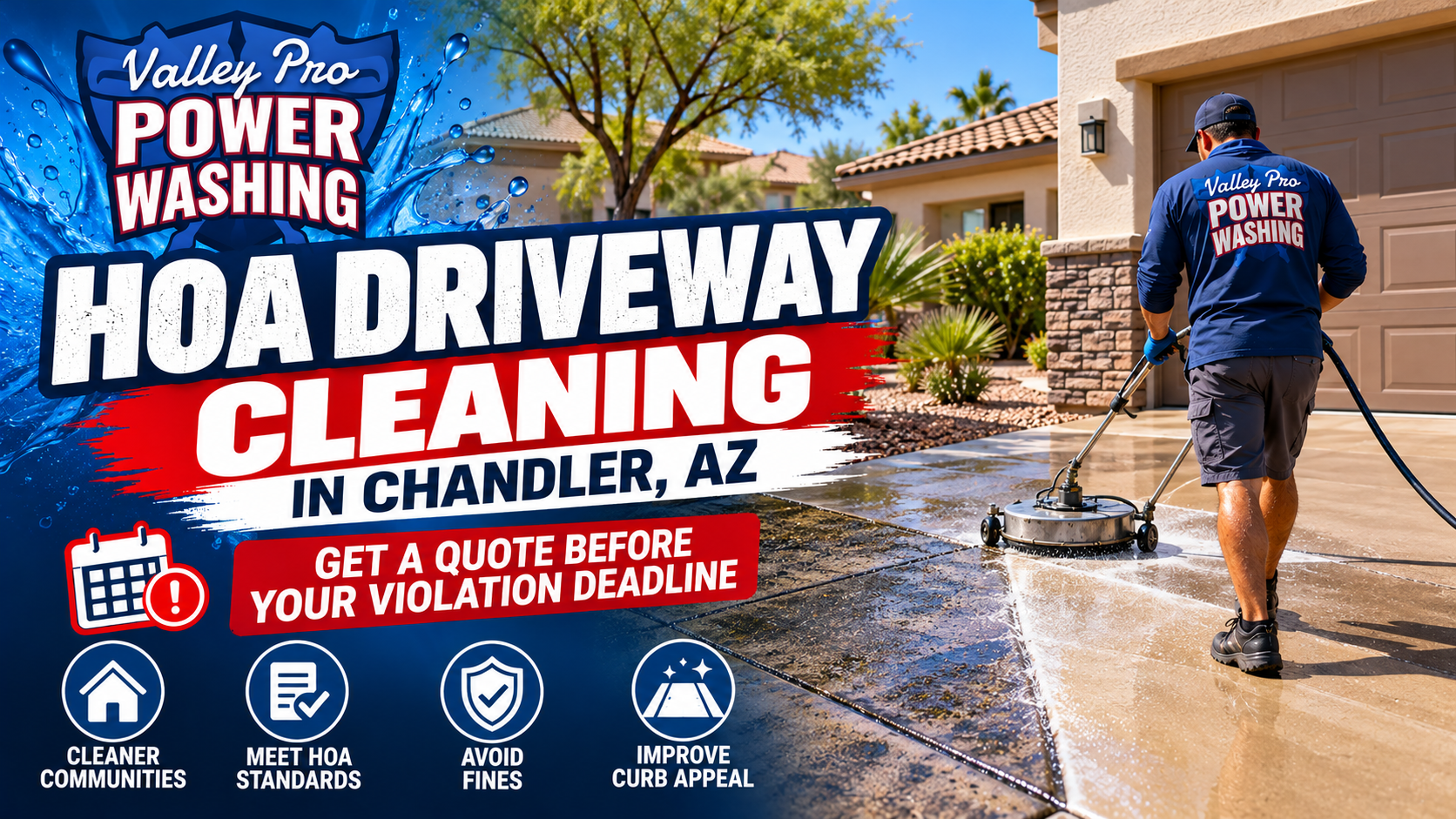
Phoenix homeowners should power wash their driveways at least once a year, with most homes getting the best results from two cleanings annually.
The desert climate brings monsoon runoff, UV oxidation, and algae growth that standard hosing cannot remove. Regular power washing stops surface damage before it becomes a costly repair.
Why Phoenix Driveways Get Dirty Faster Than You Think
Most people connect power washing with rainy climates, but Phoenix driveways face a different set of problems that are easy to overlook until the damage is visible. Concrete is porous, and in extreme heat those pores expand and absorb contaminants more deeply than in cooler regions. Combine that with tire rubber deposits, oil stains, and organic debris from desert landscaping, and you get a surface that degrades faster than most homeowners expect.
The Monsoon Factor
From late June through September, Phoenix receives the bulk of its annual rainfall in short, intense bursts. That runoff carries dirt, sediment, and organic matter directly onto your concrete. After monsoon season ends, that organic material sits on the surface and breaks down in the heat, leaving deep staining that a garden hose will not touch.
UV Degradation and Surface Oxidation
Prolonged UV exposure oxidizes concrete sealers and accelerates surface breakdown at the molecular level. Power washing removes that oxidized buildup and prepares the surface for resealing, which extends the life of the driveway by years. Skipping this step means the UV damage compounds every season until cracking and spalling become visible.
Related Services from Valley Pro
Mold and Algae in a Desert Climate
It sounds counterintuitive, but mold and algae growth are real problems in Phoenix, particularly in shaded areas and in the weeks following monsoon season.
Irrigated landscaping across Phoenix metro neighborhoods creates microclimates that support algae growth on hardscape surfaces that would otherwise be too dry. Algae on concrete is not just cosmetic. It forms a slick film that becomes a slip hazard near pool decks, garage entries, and walkways.
What Grows on Phoenix Concrete
- Green algae develops in areas with sprinkler overspray and partial shade
- Black mold can colonize porous concrete after monsoon events in poorly ventilated spots
- Efflorescence(white mineral salt deposits) is extremely common in Arizona due to the mineral-heavy water supply and appears year-round on driveways and walkways
The Recommended Cleaning Schedule for Phoenix
| Timing | Who It Fits | Best Months |
|---|---|---|
| Once per year | Full sun exposure, minimal landscaping or sprinkler contact | October or November |
| Twice per year (recommended) | Most Phoenix homes, shaded areas, irrigated landscaping nearby | October + March/April |
| As needed | After a haboob, vehicle fluid leak, or before selling the home | Any time |
Why October and March?
An October or November cleaning clears all monsoon season deposits, organic debris, and algae before winter guests arrive. A second cleaning in March or April removes winter dust storm residue and pollen buildup before the intense summer heat bakes it permanently into the surface. Together, these two cleanings keep Phoenix driveways in the best possible condition year-round.
Does Power Washing Damage Phoenix Driveways?
When done correctly, no. The key variables are PSI, nozzle angle, and distance from the surface. Standard residential concrete driveways handle 2,000 to 3,000 PSI safely. Using too high a PSI, too narrow a nozzle, or working too close can etch or pit concrete, especially on older driveways.
Stamped concrete, pavers, and exposed aggregate surfaces require lower pressure and should never be treated the same as standard poured concrete. A professional who adjusts pressure settings based on concrete age and condition is the safest choice for anything other than a basic slab.
How Power Washing Protects Your Property Value
According to a report from the National Association of Realtors, exterior cleaning and pressure washing returns an average of $10,000 to $15,000 in perceived home value at the time of sale. Curb appeal consistently ranks among the top factors buyers cite when forming a first impression.
In Phoenix's competitive real estate market, a clean, well-maintained driveway signals overall home upkeep and can meaningfully cut time on market. It is one of the lowest-cost, highest-return exterior improvements a homeowner can make before listing.
Ready to Clean Your Driveway?
Valley Pro Power Wash serves Phoenix, Scottsdale, Tempe, Mesa, Chandler, Gilbert, Ahwatukee, and surrounding areas. Get a free estimate with no obligation.
We Serve the Entire Phoenix Valley
Valley Pro Power Wash provides residential and commercial power washing throughout the greater Phoenix metro area.
Frequently Asked Questions
Phoenix homeowners should power wash their driveways at least once a year, with twice per year being the ideal schedule. The best timing is October or November after monsoon season ends, and again in March or April before summer heat bakes debris into the surface.
Most Phoenix homeowners pay between $100 and $250 for a standard two-car driveway, depending on size, staining severity, and whether sealing is included. Valley Pro Power Wash offers free estimates with no obligation.
The terms are often used interchangeably for driveways. Technically, hot water power washing is better suited for grease and oil removal, while standard pressure washing handles general dirt and algae effectively. Valley Pro recommends the right method based on your specific surface and staining.
You can, but incorrect PSI settings or the wrong nozzle can permanently etch concrete. Renting a consumer-grade unit and using a wide-angle nozzle at proper distance is the safer DIY route. For older driveways, stamped concrete, or visible cracks, professional service is the better choice to avoid permanent damage.
Early morning is ideal. The surface is cooler, cleaning solutions have more time to dwell before the heat affects them, and drying is more controlled. Avoid midday cleaning in summer when concrete surface temperatures can exceed 150 degrees Fahrenheit.
Yes, significantly. Sealing closes the pores in concrete, making it harder for oil, algae, and mineral deposits to penetrate. In Phoenix specifically, sealing also slows UV degradation of the surface. Most professionals recommend resealing every two to three years after a thorough cleaning.
You might also like
Blog - Valley Pro Power Washing